top of page

Мэдээ, мэдээлэл


Young Global Leaders Gather
The Young Global Leaders (YGL) community, an initiative of the World Economic Forum (WEF), is a global network of exceptional leaders from government, business, academia, civil society, and the arts who are dedicated to shaping a more sustainable, inclusive, and prosperous future. From August 3 to 7, 2026, Mongolia is hosting the Young Global Leaders Learning Journey Mongolia 2026 in Ulaanbaatar under the patronage of H.E. Nyam-Osor Uchral, Prime Minister of Mongolia. The pro
Sep 241 min read

Interview with Head of Sales at Phillip Securities
On June 29, 2026, at the Expanded Meeting of the Economic Development Center, we spoke with Richmond Jan, Head of Sales at Phillip Securities Private Limited, about investment opportunities and economic development.
Sep 241 min read

Interview with SouthWest Holdings Board Director
On June 29, 2026, during the Expanded Meeting of the Economic Development Board, we interviewed Tewodros Ashenafi, Chairman of the Board of SouthWest Holdings.
Sep 241 min read


Mongolia’s Meat Export Potential
The value-added gap USD 4,000 versus USD 12,600. That’s the average price per tonne Mongolia realises on red meat exports, against New Zealand’s — a gap driven by processing and branding, not by the quality of the resource. Source: The Frontier Journal, July 2026
Sep 241 min read


Mongolia’s Mineral Resources and Development Potential
Critical minerals Copper is only the beginning. Mongolia holds an estimated 31 million tonnes of rare earth reserves — around 16% of the global total — across six registered deposits and 26 known occurrence sites. Add 144,600–190,000 tonnes of identified uranium resources, with historical geological estimates pointing considerably higher pending further exploration. Two supply chains the world is urgently working to diversify. One jurisdiction. Source: The Frontier Journal,
Sep 241 min read


Green Compute: Mongolia Can Export Computing Power Instead of Electricity
Green compute Why export electricity when you can export compute? Mongolia’s domestic power demand is modest, and both neighbours are largely self-sufficient in electricity. That creates an opening: rather than sending renewable power across borders, Mongolia can consume it at home — capturing the value inside its own economy and positioning itself as a green compute hub. Livestock herders and data centres can share the steppe. Source: The Frontier Journal, July 2026
Sep 241 min read


Mongolia’s Vast Copper Resources and the Opportunity in Electrification
Copper Enough copper for 6 million electric vehicles. Every year. At full production, Oyu Tolgoi — a partnership between the Government of Mongolia and Rio Tinto — sits on one of the largest known copper deposits in the world. By 2030, it is projected to rank as the fourth largest copper mine globally. Electrification runs on copper. Mongolia has it. Source: The Frontier Journal, July 2026
Sep 241 min read


Mongolia’s Vast Grasslands: A Global Carbon Sink and Natural Asset
Grasslands Ten times the size of the Serengeti. Mongolia’s Eastern Steppe is the world’s largest intact temperate grassland — part of an ecosystem spanning 110 million hectares and 70% of the national territory. Unlike forests, 80–90% of grassland carbon is stored in the soil, making these landscapes a globally significant carbon sink. Source: The Frontier Journal, July 2026
Sep 241 min read


Mongolia’s Livestock Sector Potential
Livestock 60 million livestock. 3.5 million people. That is 17 head of livestock per person — compared with 6.4 in New Zealand, a country with roughly half Mongolia’s herd and a global reputation built on it. New Zealand exports around USD 20 billion in animal products a year, its single largest export category. The herd is here. The industry is the opportunity. Source: The Frontier Journal, July 2026
Sep 241 min read


“Mongolia has vast potential for solar and wind energy generation.”
The value of that potential What is 33x GDP worth? At the feed-in tariffs set under Mongolia’s Renewable Energy Law, full build-out of the country’s solar and wind potential would imply annual generation revenues in the region of USD 940 billion. A theoretical ceiling, not a forecast — but it frames the scale of what remains untapped. Source: The Frontier Journal, July 2026
Sep 241 min read


Mongolia Has Tremendous Potential for Renewable Energy Generation
Energy potential - 3,300 GW. That’s our combined solar and wind potential — 2,200 GW of solar across 220–260 sunny days a year, and 1,100 GW of wind sweeping the open steppe. For scale: roughly 6.5 times India’s entire installed power capacity, and about 2.5 times that of the United States or the European Union. Mongolia is also one of the windiest places on earth. Source: The Frontier Journal, July 2026
Sep 241 min read


Ulaanbaatar Chamber of Commerce Signs MoU with Shenzhen Chamber of Commerce for Future Cooperation
The Ulaanbaatar Chamber of Commerce signed a Memorandum of Understanding (MoU) with the Shenzhen Chamber of Commerce of the People’s Republic of China to establish a framework for future cooperation.
Sep 241 min read


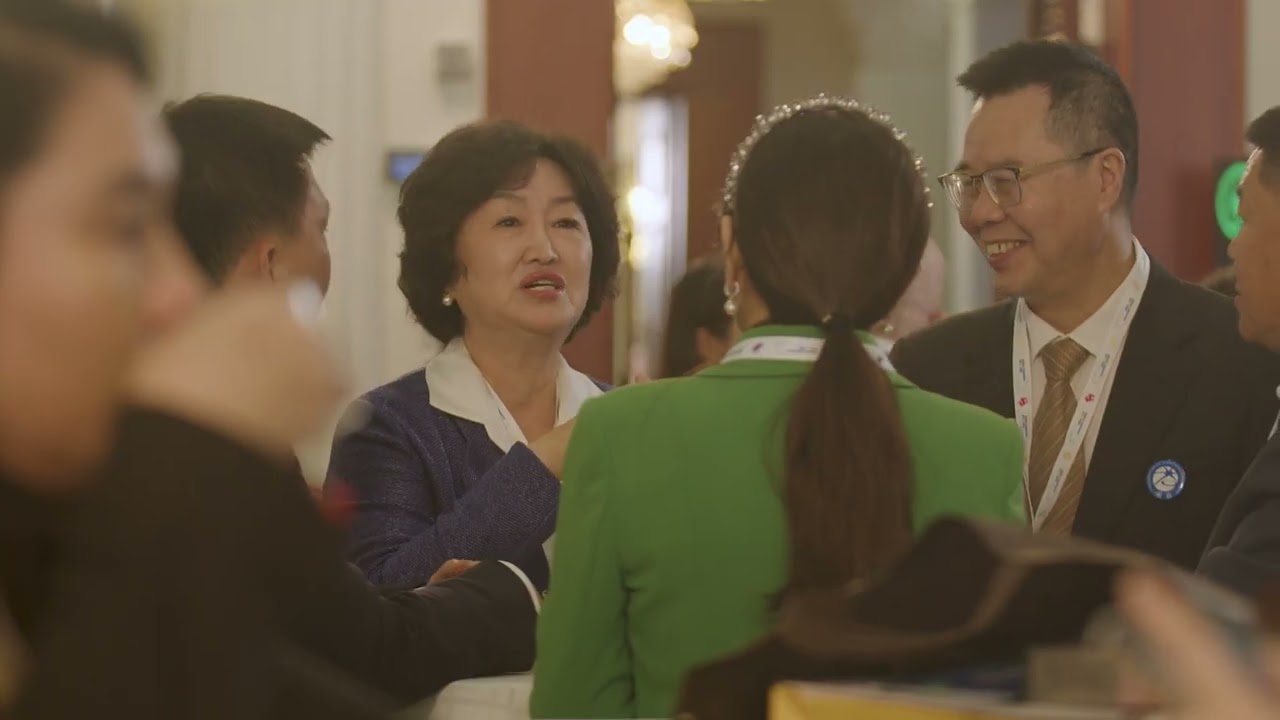


EDB Meeting Secures $545 Million in Investment and Cooperation Projects
Economic Development Board Meeting Concludes with Agreements to Launch USD 545 Million in Investment and Cooperation Projects The regular meeting of the Economic Development Board under the Prime Minister of Mongolia was held with the participation of more than 120 domestic and international businesses and investors. The expanded session was jointly organized by the Economic Development Board and the Mongolian Economic Forum NGO. The meeting focused on key topics and proposal
Sep 242 min read


$2 Billion Financing Mobilized to Support Digital Transformation and Energy Efficiency
Minister of Digital Development, Innovation and Communications Ch. Nomin: “The Government is mobilizing US$2 billion in financing to support energy efficiency, renewable energy, and digital transformation. A multi-layered connectivity architecture based on terrestrial fiber-optic networks, satellite systems, and backup routes will establish continuous, reliable, and secure digital infrastructure. This will enable Mongolia to develop a new data center ecosystem that ensures da
Sep 241 min read


Draft Law on Specialized Housing Finance Banks Developed
Deputy Governor of the Bank of Mongolia G. Enkhtaivan: “We have developed the draft of the first-ever Law on Specialized Housing Finance Banks. If enacted, the law will strengthen the stability of the housing finance system, improve the investment environment, diversify long-term sources of financing, and expand citizens’ access to housing. It will also establish an important legal foundation for supporting sustainable urban development and economic growth.”
Sep 241 min read
bottom of page